
Duolingo • 2019
How to grow paying subscribers for a free app
Duolingo launched Plus, its first paid subscription, in 2017. The challenge was growing subscribers ahead of the IPO without breaking the promise that learning on Duolingo stays free. I was one of the early designers on monetization, and every project here is one I owned: the hooks that sold premium features, the moments where we offered Plus, New Year’s promotions, and the gem economy for free learners.
The goal
Growing subscriptions was key to Duolingo’s business ahead of its IPO. I designed and experimented with how premium features were promoted, framed, and targeted to convert the right learners into paying subscribers.
Paying customers tend to be power users
Research showed that Duolingo’s power users were most likely to subscribe. I focused on promoting Progress Quiz to this cohort, highlighting achievement tiers that made progress more tangible and encouraged continued engagement and retention.
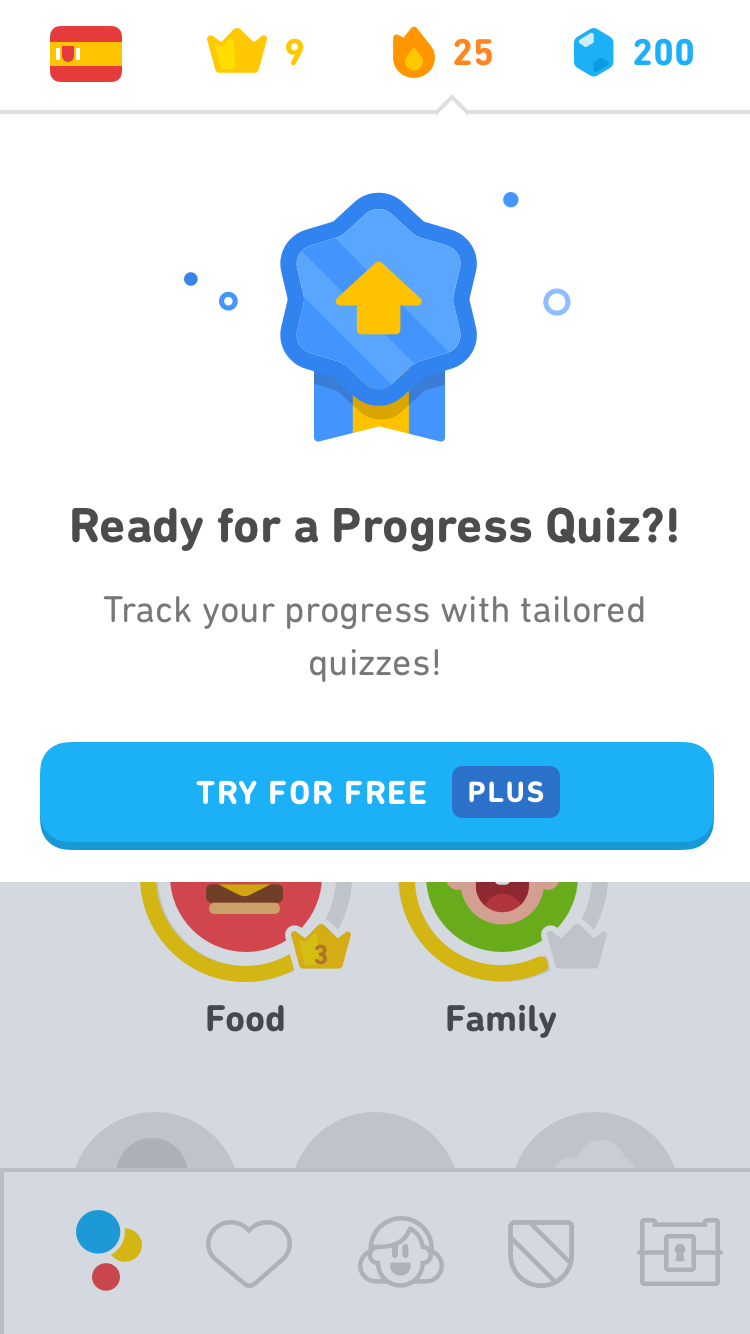
the hook
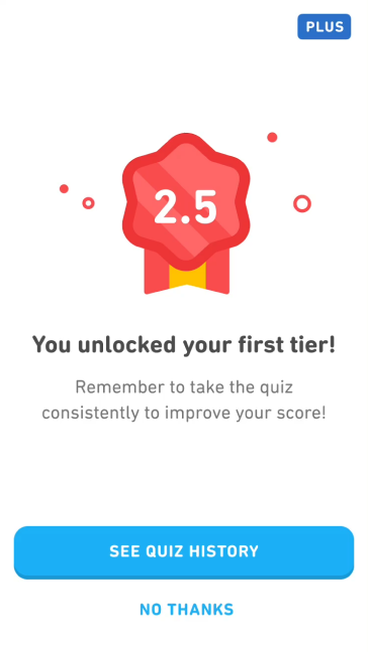
unlock first tier
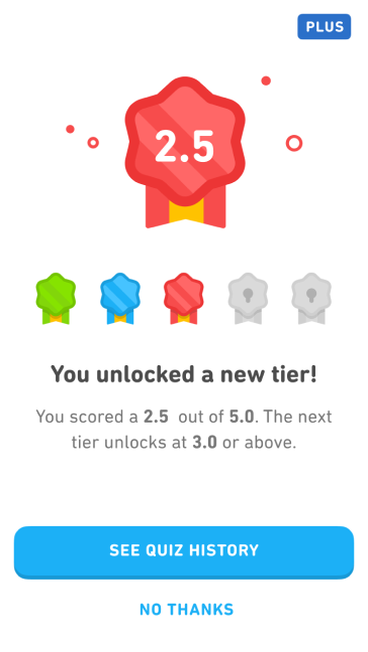
continuous utility
Offer Plus when it solves a problem
Duolingo uses gates, like limited health and test-out attempts, to discourage binge learning and build a steady habit. That works for casual learners. Power users practice more, so they hit those limits more often.
So I put Plus offers in exactly those moments: spend gems to keep going, or start a free trial. Once your gems ran out, Plus became the clearest way forward. Trial conversion went up 30%. It cannibalized some gem purchases, but overall revenue grew.
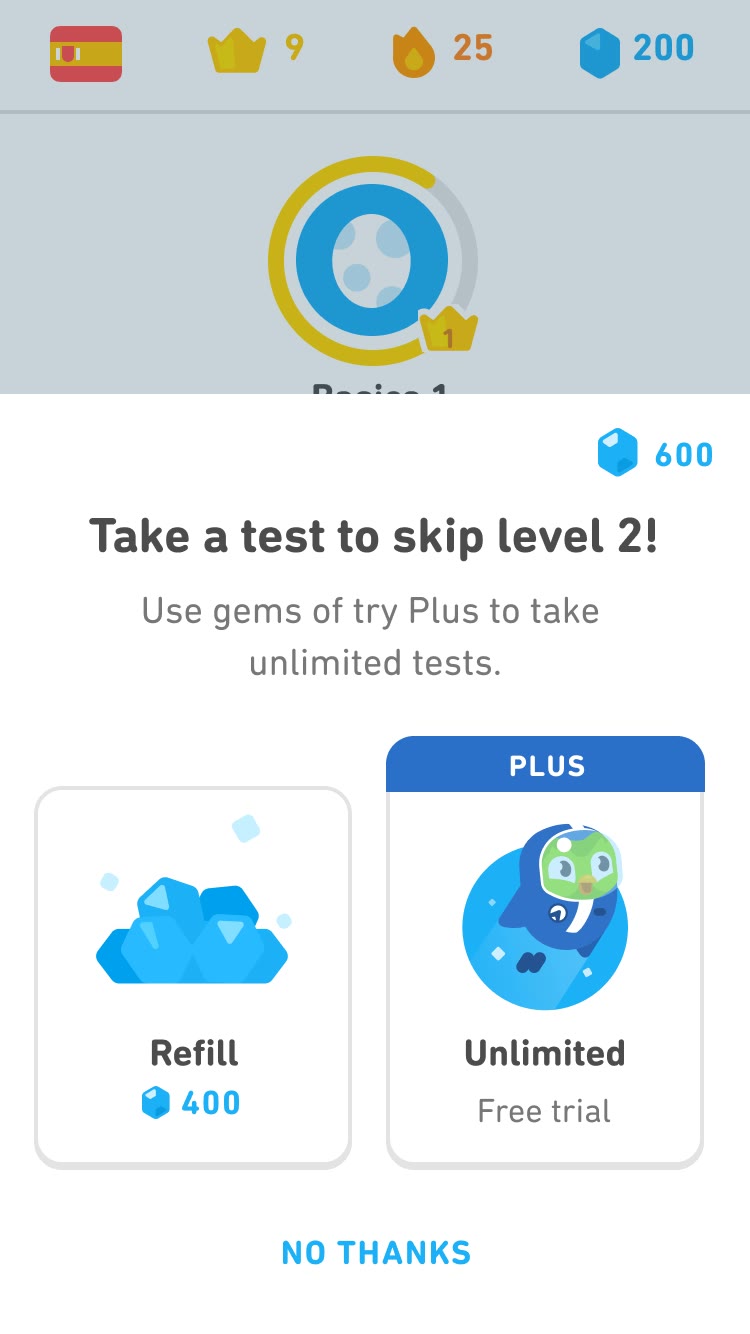
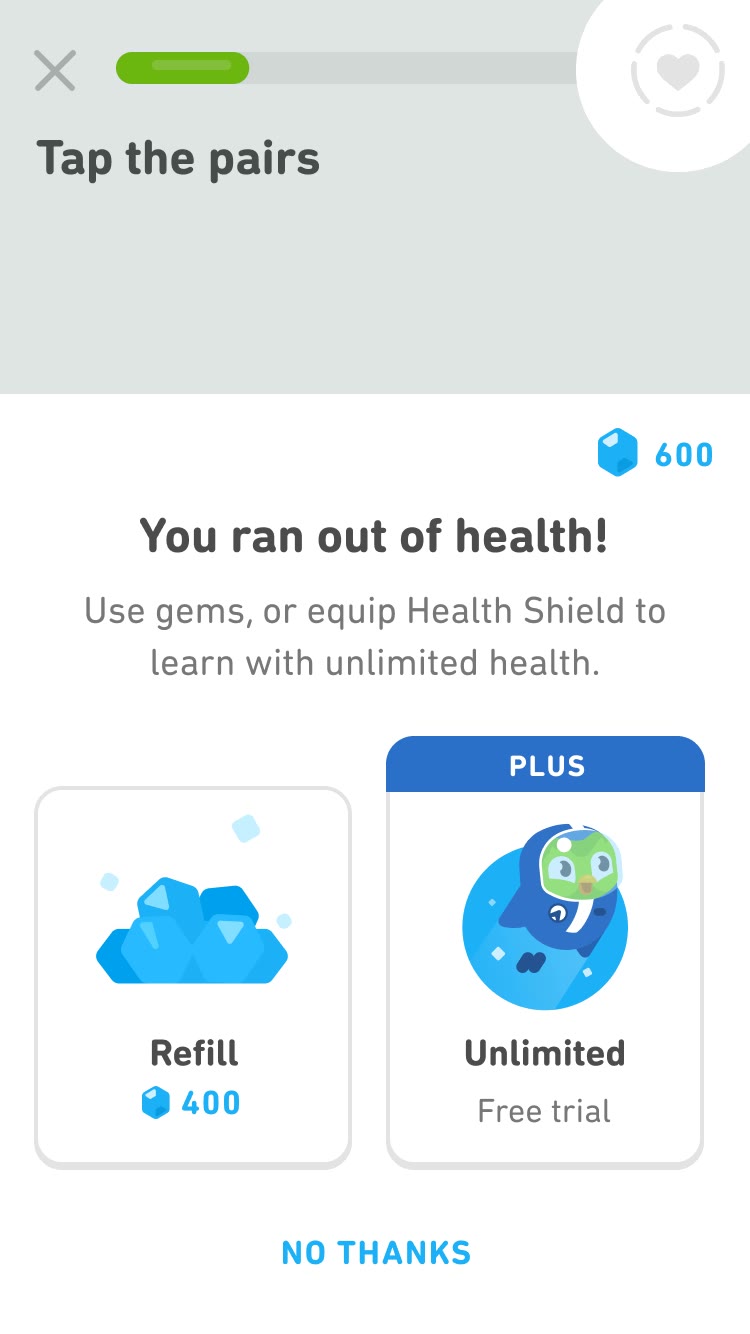
plus is even more enticing
Test your biggest moment early
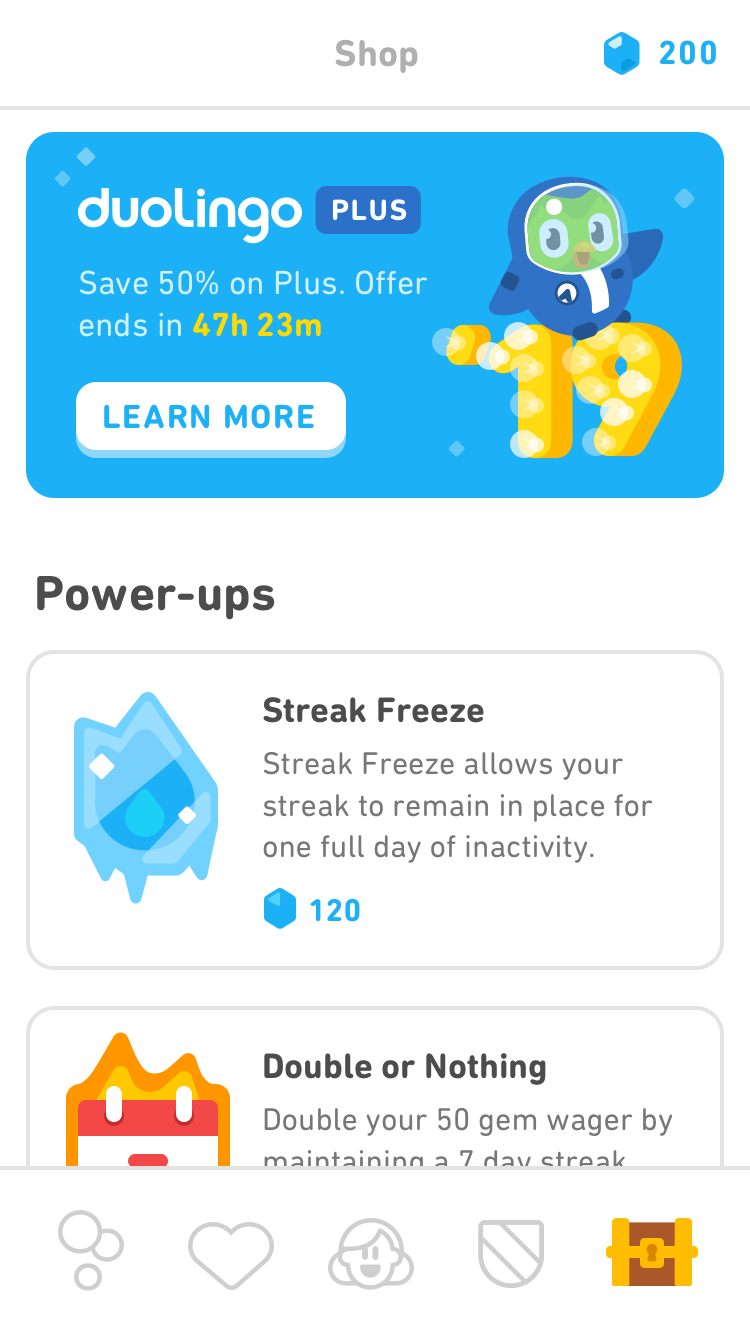
New Year’s is Duolingo’s biggest subscription opportunity, when millions of people make resolutions to learn a language. Each year, the team experiments heavily with its Plus promotion to maximize conversions. For the 2019 campaign, we started months in advance, testing everything from sale duration and pricing to subscription packages in a multi-armed experiment.
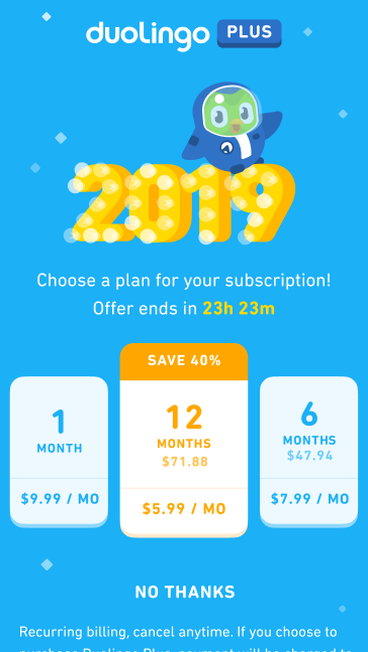
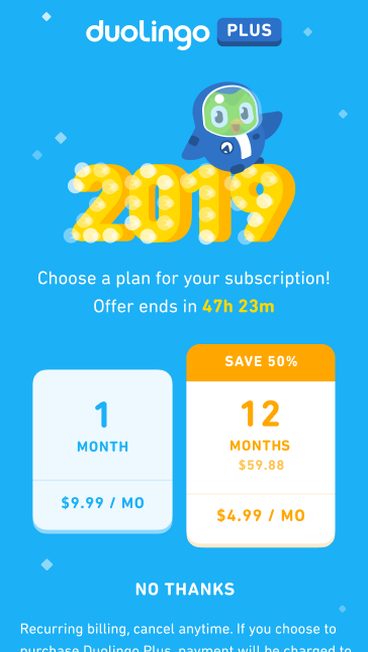
Can you guess which combination converted best?
The test also pitted the previous year’s design against a new one. The promotion then scaled across the app, from the Shop to lesson end screens and emails, on iOS, Android, and web.
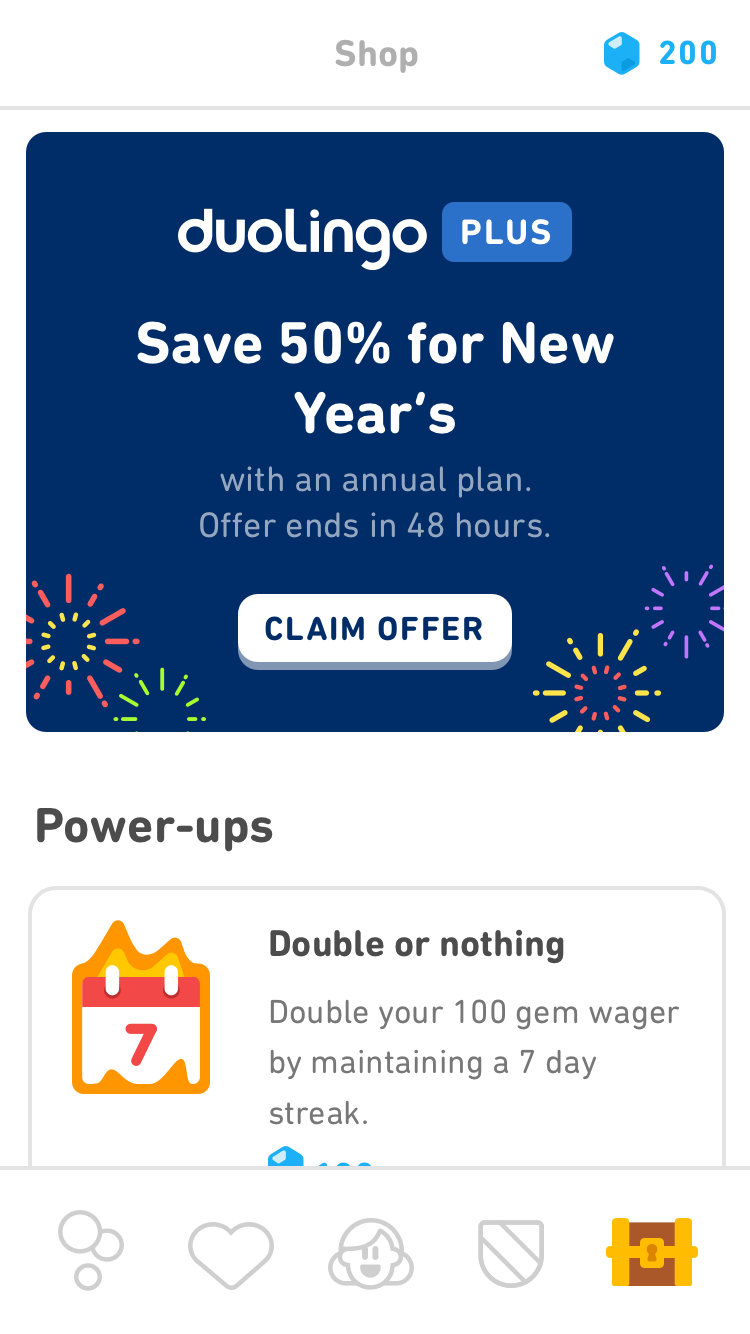
I drew this Duo! (Kurt Hartfelder animated it)
Freemium can still be fun!
Freemium still had to pay its way. We needed to earn from free learners too, so I borrowed from games like Clash of Clans and turned ads and gems into rewards. Watch an ad, open a chest, earn gems. Ads felt like part of the game instead of an interruption.
Looking back
A few lessons held across all of this work. Paying customers don’t behave like everyone else, so premium features should be designed around how they already use the product. Finding the right people to promote to is powerful; an offer at the moment someone hits a limit beats a banner shown to everyone. The highest-stakes moments deserve testing well in advance. And freemium should never mean worse. The free experience is what makes the whole model work.